EN
EN
 AR
AR
 BG
BG
 HR
HR
 CS
CS
 DA
DA
 NL
NL
 FI
FI
 FR
FR
 DE
DE
 EL
EL
 HI
HI
 IT
IT
 JA
JA
 KO
KO
 NO
NO
 PL
PL
 PT
PT
 RO
RO
 RU
RU
 ES
ES
 TL
TL
 IW
IW
 ID
ID
 LT
LT
 VI
VI
 TH
TH
 TR
TR
 AF
AF
 MS
MS
 KM
KM
 LO
LO
 MY
MY

The Cap Layer Does the Heavy Lifting
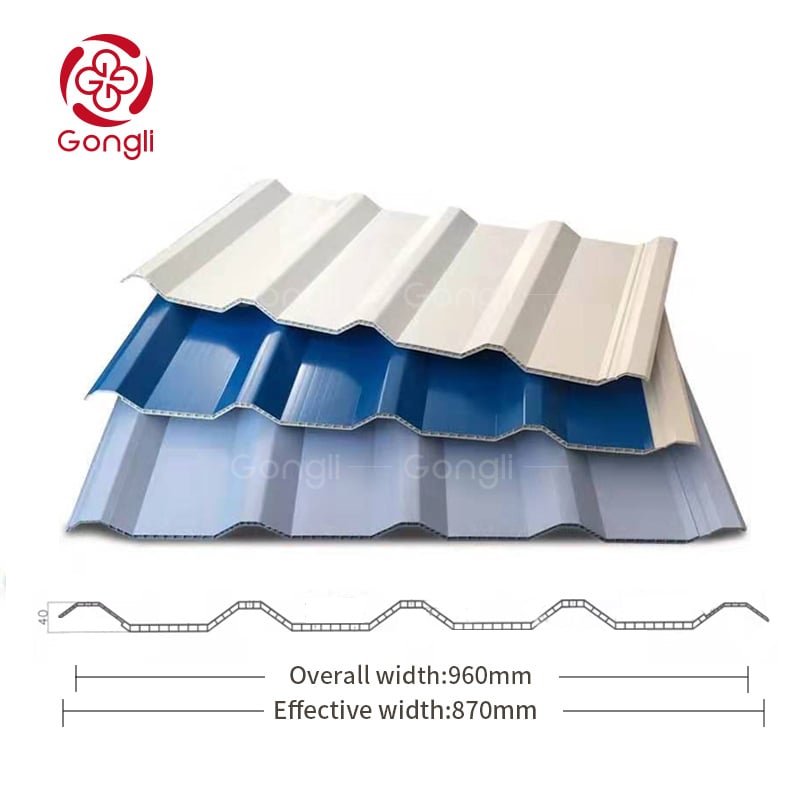
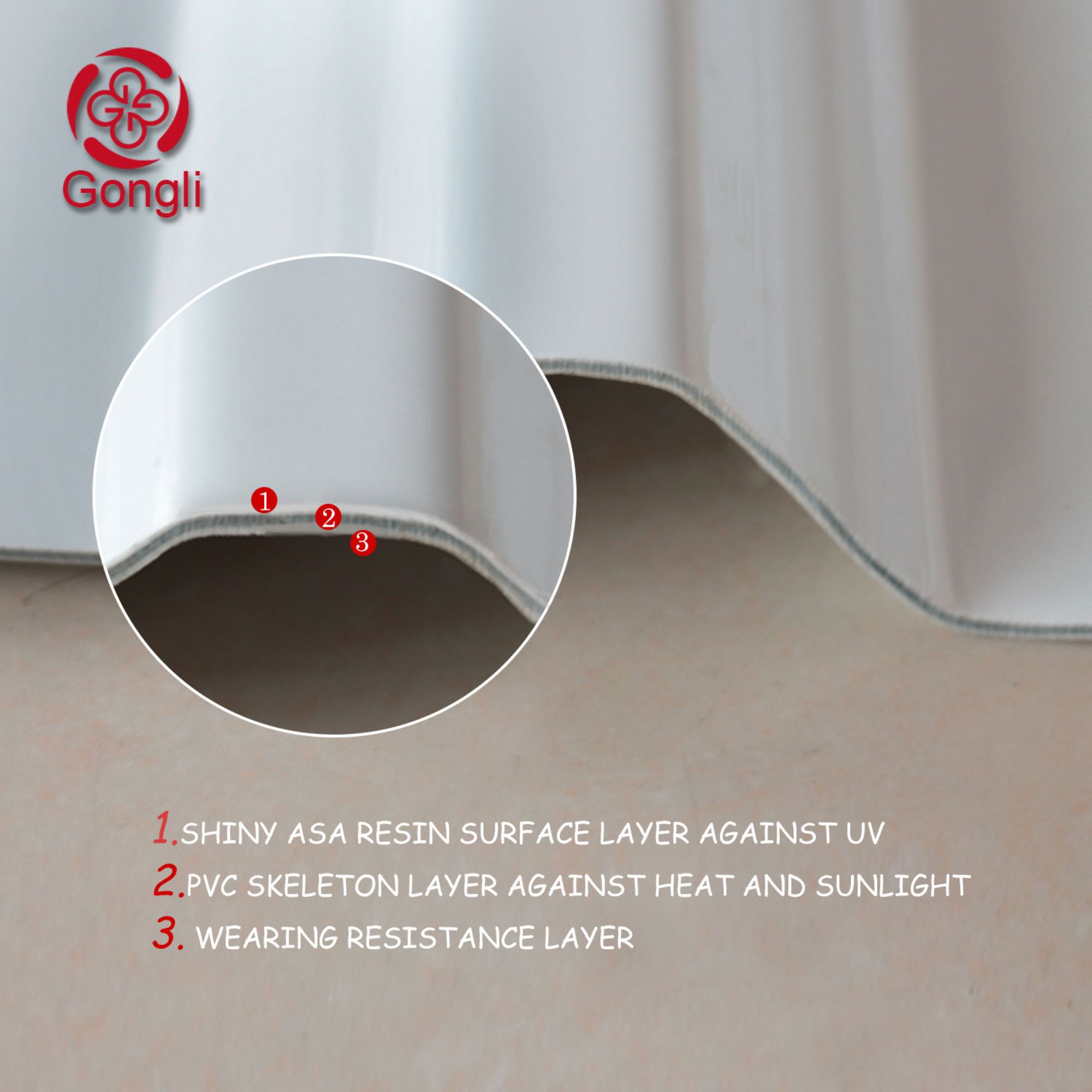
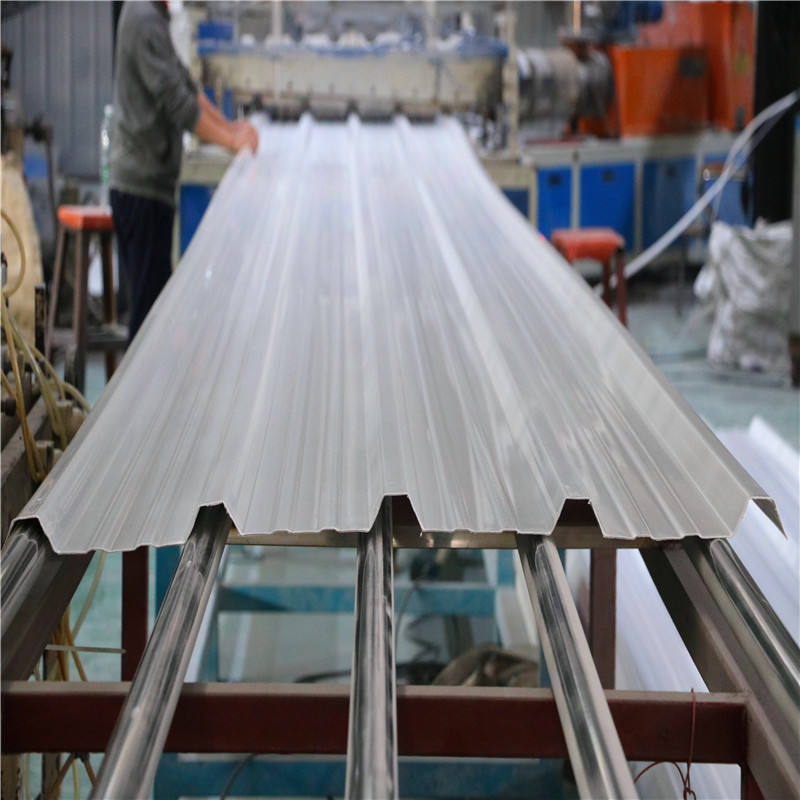
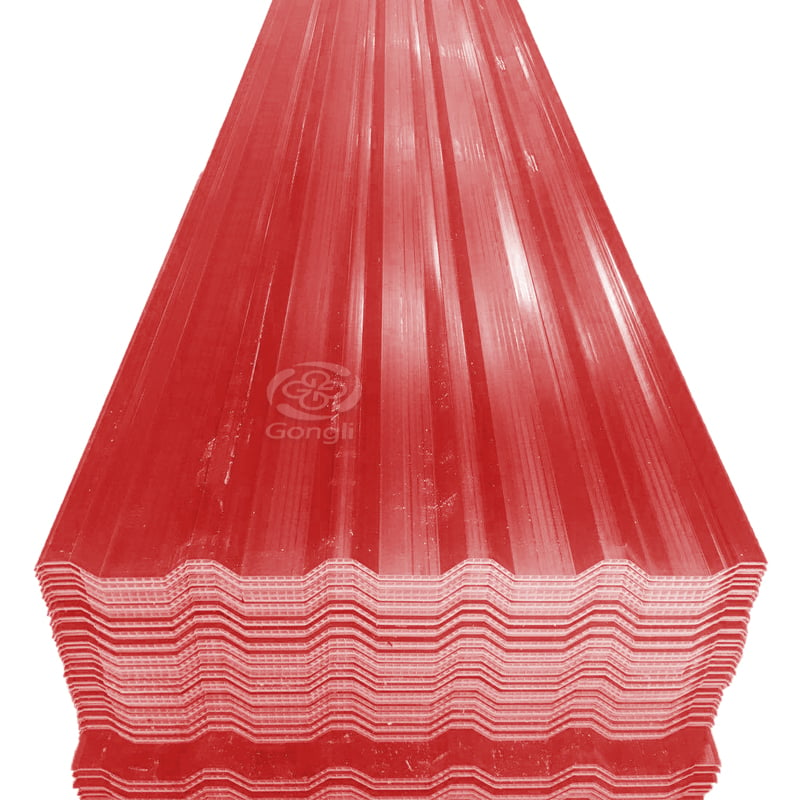
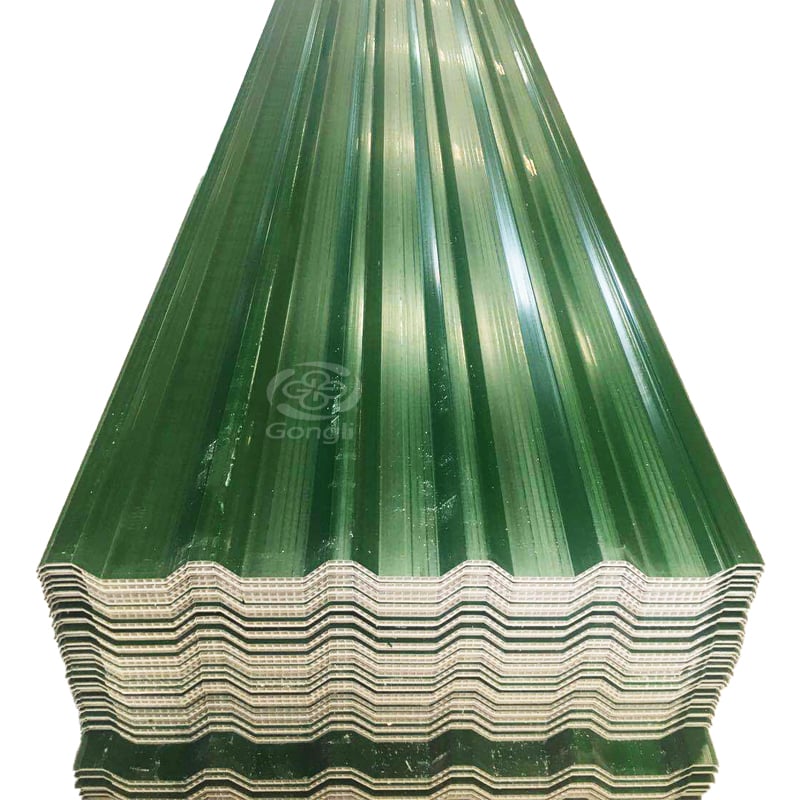
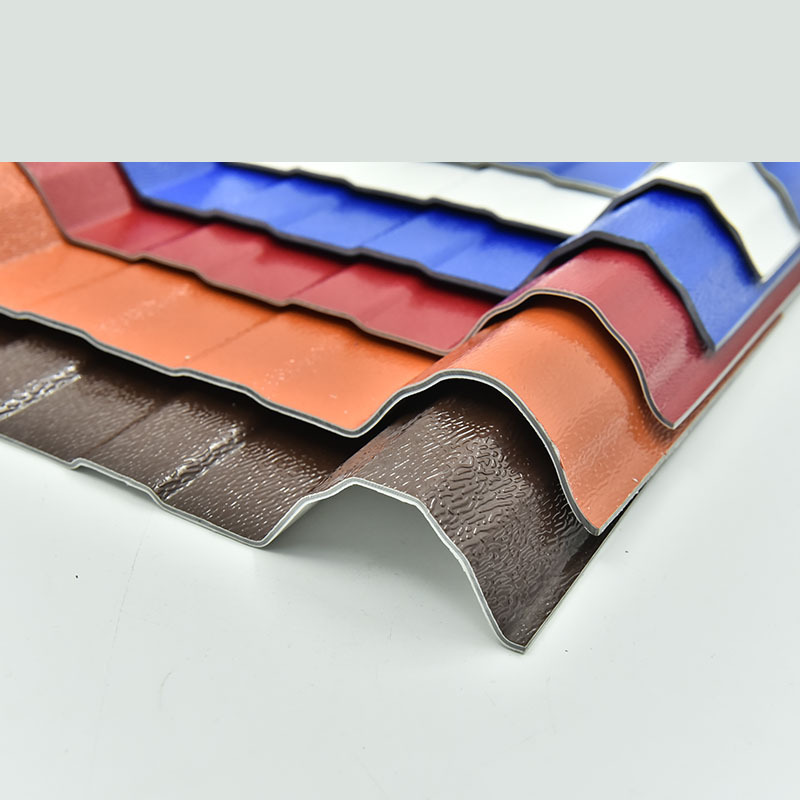
An ASA roof sheet gets much of its identity from a thin acrylic-styrene-acrylonitrile cap bonded to a PVC substrate. It is co-extruded as part of the sheet, so the weathering protection has depth rather than sitting on the surface. The PVC core gives stiffness, chemical resistance, and a familiar installation feel. The ASA skin takes UV, rain, and temperature swings. When the cap is formulated well and the line is controlled, the surface holds up far longer. This two-layer approach is the main reason ASA capped roofing behaves differently from plain PVC or low-cost composite panels.
Weathering Is Measured in Years, Not Just UV Hours
Manufacturers often quote accelerated weathering, but real roofs are messier. ASTM G154 and ISO 4892-2 cycle UV, heat, and moisture in a lab. Those tests help compare formulations, but they do not copy a west-facing roof over a parking lot. A well-made ASA roof sheet usually targets low color shift after 2,000 hours of QUV exposure. Poorly stabilized PVC can chalk and shift within one or two summers in high-UV regions. The difference comes from the ASA cap absorbing UV instead of letting it attack the PVC core. That mechanism is why color retention and surface gloss last longer on quality ASA panels.
Feature |
ASA capped sheet |
Plain PVC sheet |
FRP sheet
|
UV color retention |
High, cap protects core |
Moderate to low |
Moderate
|
Surface chalking |
Low with good cap |
Can appear early |
Can dull over time |
Impact resistance |
Good at normal temperatures |
Good but more temperature sensitive |
High but can crack
|
Thermal expansion |
Around 6 to 8 x 10^-5 /C |
Similar range |
ower, around 2 to 4 x 10^-5 /C
|
Chemical resistance |
Good for many mild acids and bases |
Good |
Varies by resin
|
Weight |
Light |
Light |
Light to moderate
|
Repair handling |
Cuts and fastens like PVC |
Cuts and fastens like PVC |
Dustier, can splinter
|
Impact, Heat, and Movement on a Real Slope
Plastic roofing moves. A 10 m ASA panel can grow and shrink by several millimeters over a 40 C swing. That movement is normal. Problems start when fasteners are overdriven, holes are too tight, or purlin spacing is too wide. ASA sheets handle hail and foot traffic better than many plain PVC products, but they are not metal. Walking on unsupported spans can leave creases. In cold regions, impact resistance drops, and rough handling at the job site causes more damage than weather. Good installation leaves room for movement and keeps fasteners at the crest.
Chemical and Color Performance in Harsh Air
ASA copolymers resist many acids, bases, and salts that attack other plastics. That matters near chemical plants, coastal areas, and agricultural buildings where ammonia and sulfur compounds are present. A retrofit project at a chemical facility in southern China offered a useful comparison. Older plain PVC sheets on an auxiliary building had chalked and faded after a few years of acid mist and strong sun. Replacement panels with a thicker ASA cap showed much less color shift after the same exposure period. ASA roofing still has limits. Strong solvents, concentrated oxidizers, and some industrial fumes can damage the surface. Material selection should match the actual exposure, not a generic claim.
Installation Details That Separate ASA From Other Plastics
ASA roof sheet installs much like PVC sheet, but a few details protect the cap. Fine-tooth blades and slow feeds reduce edge chipping. Metal swarf should be brushed off the same day, because trapped filings can stain the surface. Fasteners with bonded EPDM washers should be driven at the crest, snug but not crushed. Side laps face away from prevailing wind. End laps increase as pitch drops. Thermal expansion needs clearance in pre-drilled holes. The material is forgiving, not indestructible. Contractors who treat it like thin metal often get callbacks. Contractors who treat it like a moving plastic sheet get cleaner results.
Where the Advantages Matter and Where They Do Not
ASA capped roofing makes sense where UV, color stability, and chemical exposure are real concerns. It is not the best answer for every building. Extremely high heat, heavy foot traffic, or constant solvent contact may call for a different material. Budget projects with short horizons may find plain PVC or lower-grade composite panels acceptable. The key is to compare the full cost of fading, maintenance, and replacement, not just the price per square meter. For buyers who need consistent cap thickness, color matching, and stable supply, Gongli has built its manufacturing around virgin raw materials, imported ASA resins, and strict batch control. That focus helps keep each order close to the approved sample, which matters when a roof is only as good as the sheet that arrives on site.