EN
 AR
 BG
 HR
 CS
 DA
 NL
 FI
 FR
 DE
 EL
 HI
 IT
 JA
 KO
 NO
 PL
 PT
 RO
 RU
 ES
 TL
 IW
 ID
 LT
 VI
 TH
 TR
 AF
 MS
 KM
 LO
 MY

What are the common applications of FRP Roof Sheets in construction?
Beyond the Basic Shed: Where FRP Sheets Actually Earn Their Keep
Fiberglass Reinforced Plastic (FRP) roofing has been around for decades, but it is often misunderstood. A lot of buyers confuse it with standard polycarbonate or cheap PVC panels. In reality, FRP Roof Sheets are a distinct category. They are composite materials made from glass fibers embedded in a resin matrix. This structure gives them a unique position in the construction market, sitting somewhere between traditional corrugated metal and high-end architectural glazing.
The question of where to use them comes up frequently on job sites. It is not just about slapping a translucent panel on a shed. The material properties dictate very specific, high-value use cases. Understanding the chemical and mechanical profile of these sheets is key to specifying them correctly. The following sections break down the most common applications, based on field experience and project requirements.
Chemical Plants and Corrosive Environments
This is the heavyweight application. If a facility handles acids, alkalis, or harsh solvents, standard metal roofing is a liability. A single leak can destroy inventory or halt production. FRP panels resist a wide range of chemicals that would eat through galvanized steel in months.
Take a project in southern China, for instance. A chemical processing plant needed to replace a failing metal roof over a storage area for volatile compounds. The off-gassing was corroding the fasteners and the metal decking itself. The retrofit team switched to a high-grade resin FRP sheet. The installation was tricky because they had to match the existing purlin spacing, but the result was a roof that shrugged off the fumes. In these settings, the sheets act as a barrier. It is not just about keeping rain out; it is about maintaining the integrity of the building envelope against aggressive internal atmospheres.
Cold Storage and Food Processing Facilities
Hygiene and moisture management are the two biggest headaches in food-grade construction. Wood rots, metal rusts, and condensation drips onto product. FRP sheets offer a solution that addresses both issues simultaneously. They do not support mold growth and are impervious to the constant washdowns required in meat or dairy processing.
One specific advantage is thermal bridging. In cold storage, every gap in insulation is a potential ice dam. FRP sheets can be manufactured with a high insulation value or used as a liner panel. They are often specified for the ceilings of freezer rooms. The surface is smooth and cleanable, which helps pass health inspections. Unlike some painted metals that chip and flake over time, the color in an FRP sheet is usually throughout the resin, so scratches do not compromise the appearance or the hygiene barrier.
Agricultural Buildings and Poultry Houses
Agriculture is a massive market for FRP, but the requirements are very different from a chemical plant. Poultry houses are notorious for high humidity and ammonia vapors. Ammonia is particularly nasty; it attacks metal fasteners and concrete floors. FRP roofing sheets have become a staple in modern poultry operations because they handle the ammonia load without degradation.
There is also the factor of daylighting. Farmers need natural light to regulate the birds' circadian rhythms without relying entirely on electricity. Translucent FRP panels, often referred to as skylight sheets, are integrated into the roof structure. A common setup is to run a strip of these sheets down the center of the roof. This provides diffused light that is much softer than direct sunlight, reducing stress on the flock. It is a practical application where the material's durability meets an operational need.
Architectural Glazing and Sunrooms
Moving away from industrial uses, FRP is finding a niche in residential and commercial architecture. While glass is the traditional choice for sunrooms, it carries significant weight and safety concerns. Laminated glass is expensive, and tempered glass can shatter. FRP sheets offer a lighter alternative with high impact resistance.
For homeowners looking to build a conservatory or cover a patio, the choice often comes down to the aesthetics. The term "pvc blue sheet" is sometimes used colloquially to describe the tinted look, though technically FRP and PVC are different. The textured surface of a fiberglass sheet diffuses light differently than clear glass, creating a softer, more even illumination. It eliminates the harsh glare and hot spots often found under cheap polycarbonate. Architects appreciate the matte finish and the ability to walk on the sheets during installation, which is not possible with many other plastic roofing options.
Material Comparison: Making the Right Choice
Specifying the correct material requires a direct comparison. The table below outlines how FRP stands up against common alternatives in key performance areas. This data is compiled from industry testing standards (ASTM D3841) and field performance metrics.
Property |
FRP Sheets |
Polycarbonate |
PVC Sheets |
Corrugated Metal |
Corrosion resistance |
High; resin-dependent |
Good; chemical-specific |
Good; limited against certain solvents |
Depends on coating; bare steel is low |
Impact strength |
Good; fiber-reinforced |
Excellent |
Low to moderate; may become brittle with ageing or low temperature |
Moderate; depends on gauge and profile |
Thermal expansion |
Low |
High |
High |
Low |
Light transmission |
Diffused; commonly 80–85% for translucent grades |
Clear; typically 85–90% |
Translucent; varies widely by grade |
None; opaque |
Acoustic insulation |
Limited for single-skin sheets |
Limited for single-skin sheets |
Limited for single-skin sheets |
Limited for bare sheets; improve with insulation and decoupled framing |
Initial cost |
Moderate |
High |
Low |
Low to moderate |
A key takeaway from this table is that FRP does not win every category. For pure impact resistance, polycarbonate is the champion. However, for a balance of corrosion resistance and thermal stability, FRP is often the superior engineering choice. The low thermal expansion coefficient is critical; it means the sheets move less in the heat, reducing the stress on fasteners and the risk of leaks at the screw holes.
Limitations and Sourcing Considerations
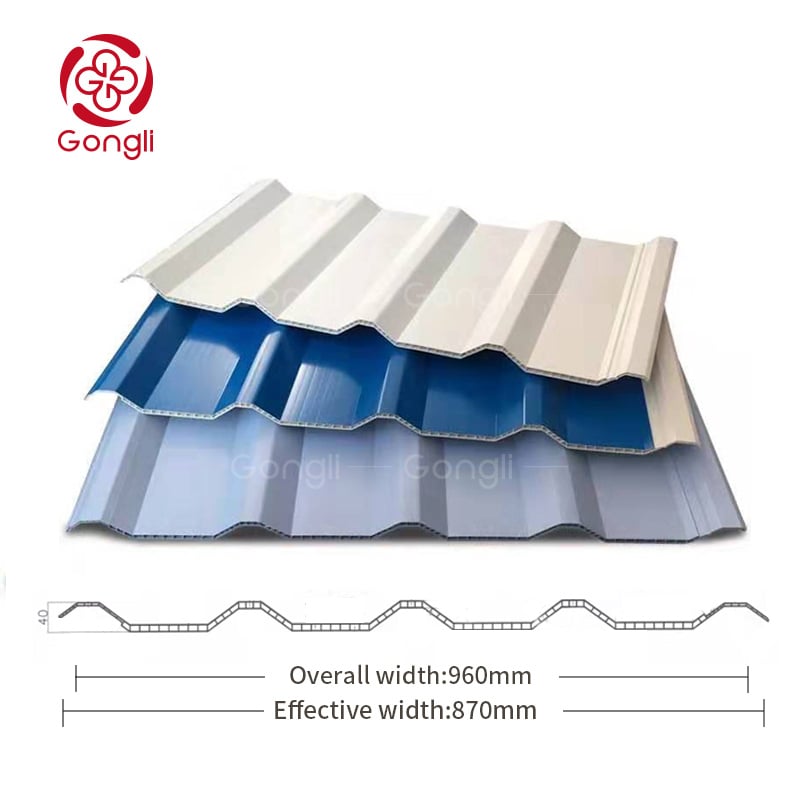
It is important to be honest about limitations. FRP is not indestructible. If the resin is of low quality, the sheet will "fiberbloom" or yellow prematurely. This is a common issue with cheap imports. The key is the quality of the raw materials. Many buyers ask "gdje kupiti" (where to buy) or search for "gongli roofing sheet" to see if specific brands are reliable. The sourcing decision is arguably more important than the installation itself.
Furthermore, cutting FRP requires proper tools. Standard circular saws will tear the fibers and create a rough edge. A diamond blade or a specialized cutter is needed. If the sheets are walked on aggressively during installation, they can crack, although they are more forgiving than PVC.
For projects requiring a consistent supply of high-grade materials, particularly in regions like Foshan where manufacturing ecosystems are dense, working with an established producer matters. For instance, Guangdong Gongli New Material has built its reputation on refusing to use recycled waste in its resin mix, opting for imported raw materials instead. This approach ensures the sheets maintain their UV stability and structural integrity over time, which is a critical factor when the application is a factory roof that cannot afford leaks.
Recommended Products
Hot News
-
How to choose the right roof tile
2024-01-24
-
PVC Plastic Tiles: The Ideal Roofing Material
2024-01-24
-
The Essentials of Synthetic Resin Tile Manufacturing
2024-01-24